Roofs & Terraces Costa Blanca
Waterproof polyurea coating for flat roofs, roof terraces and balconies
Not just pools
Alongside swimming pools, we specialise in polyurea for flat roofs, roof terraces and balconies. Whether it is a leaking flat roof, a concrete roof terrace or a balcony, polyurea forms one seamless membrane that waterproofs the entire structure, including the junctions with upstands, penetrations and rainwater outlets, from the azoteas of Dénia to the solariums of Benidorm.
Roofs
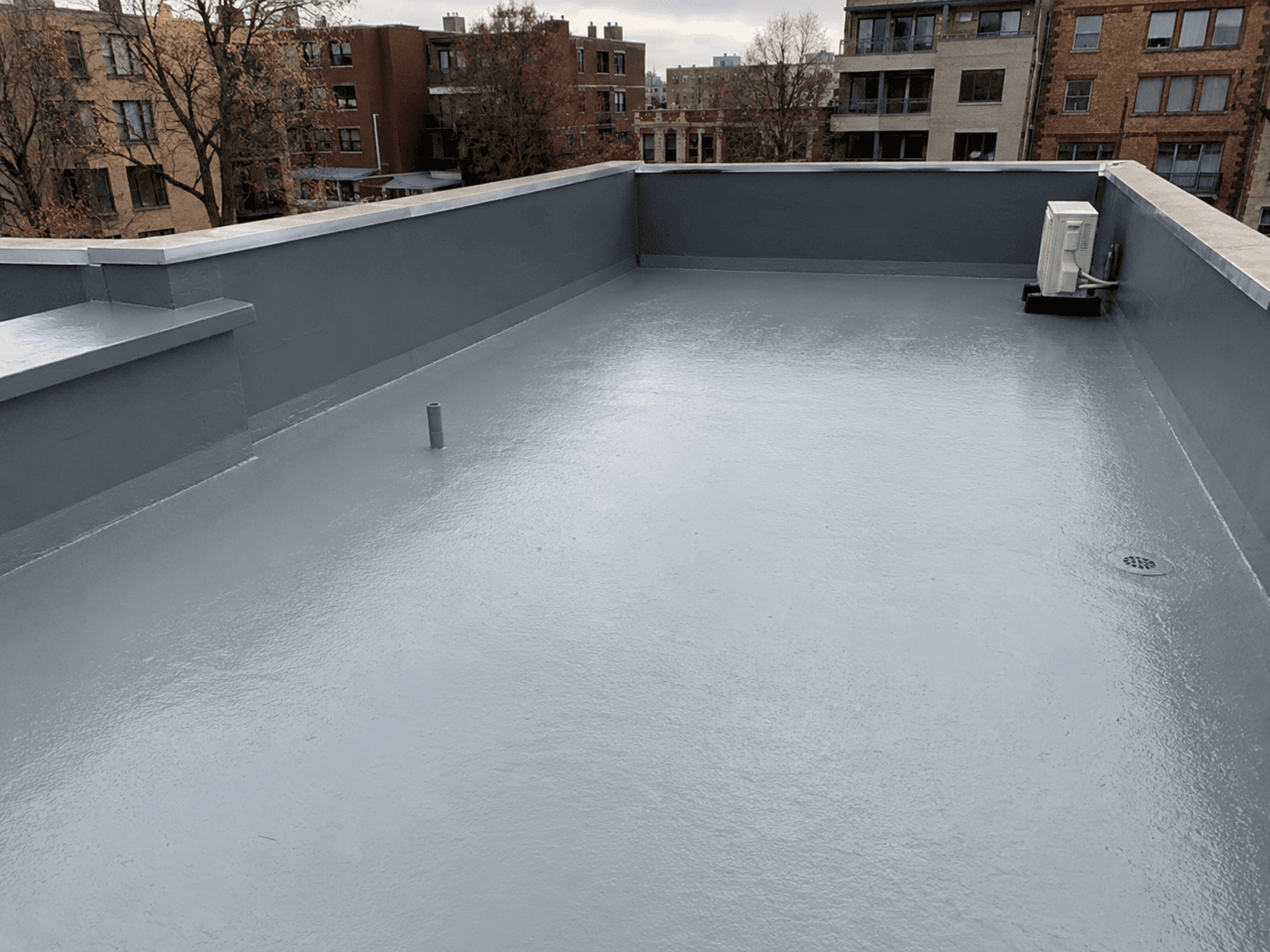
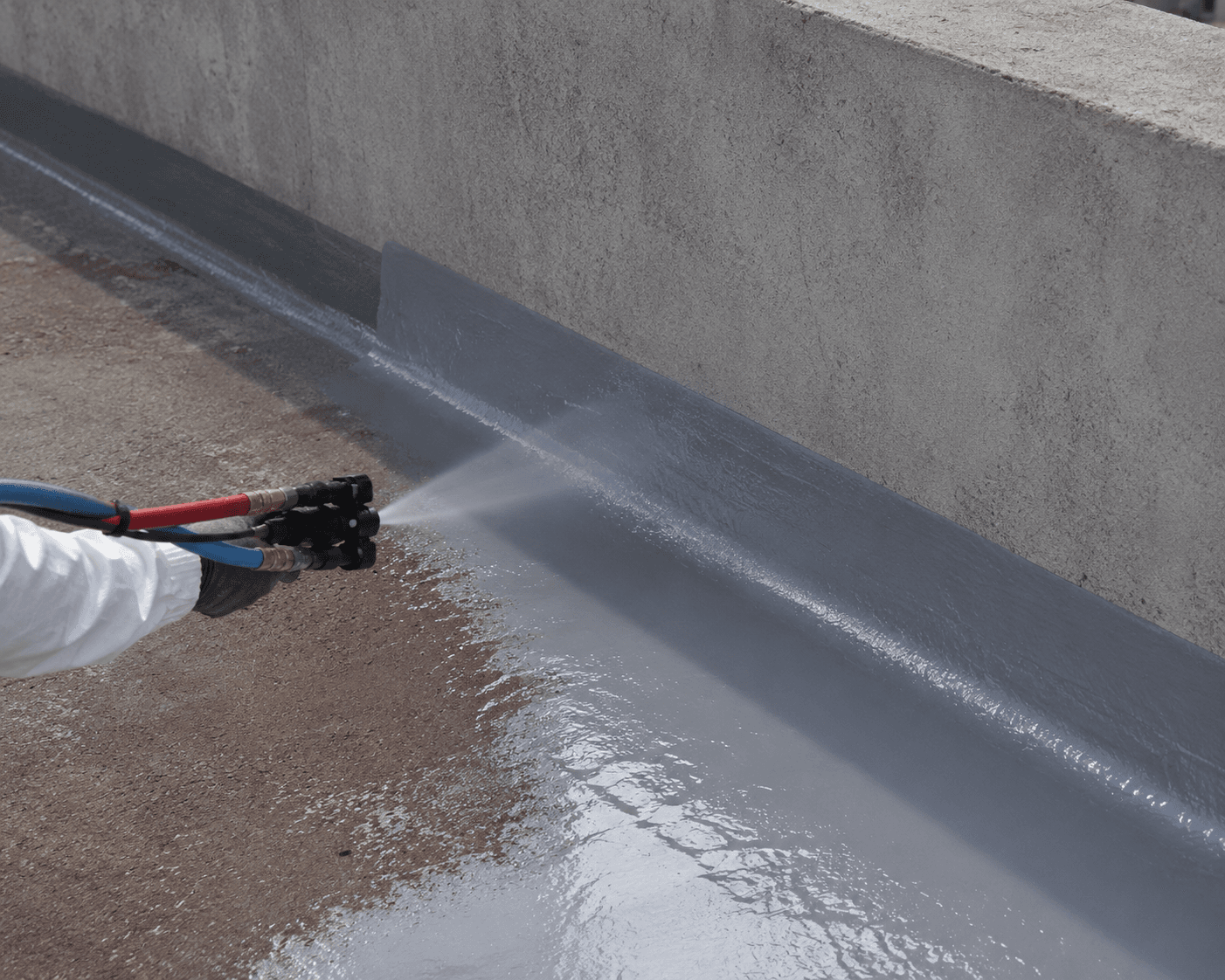
For flat and gently sloping roofs we apply a seamless polyurea membrane that can be sprayed directly over concrete, bitumen or asphalt sheets after the right preparation. The layer cures within minutes, forms no seams and stays fully watertight at the transitions to upstands, roof penetrations and rainwater outlets.
Terraces
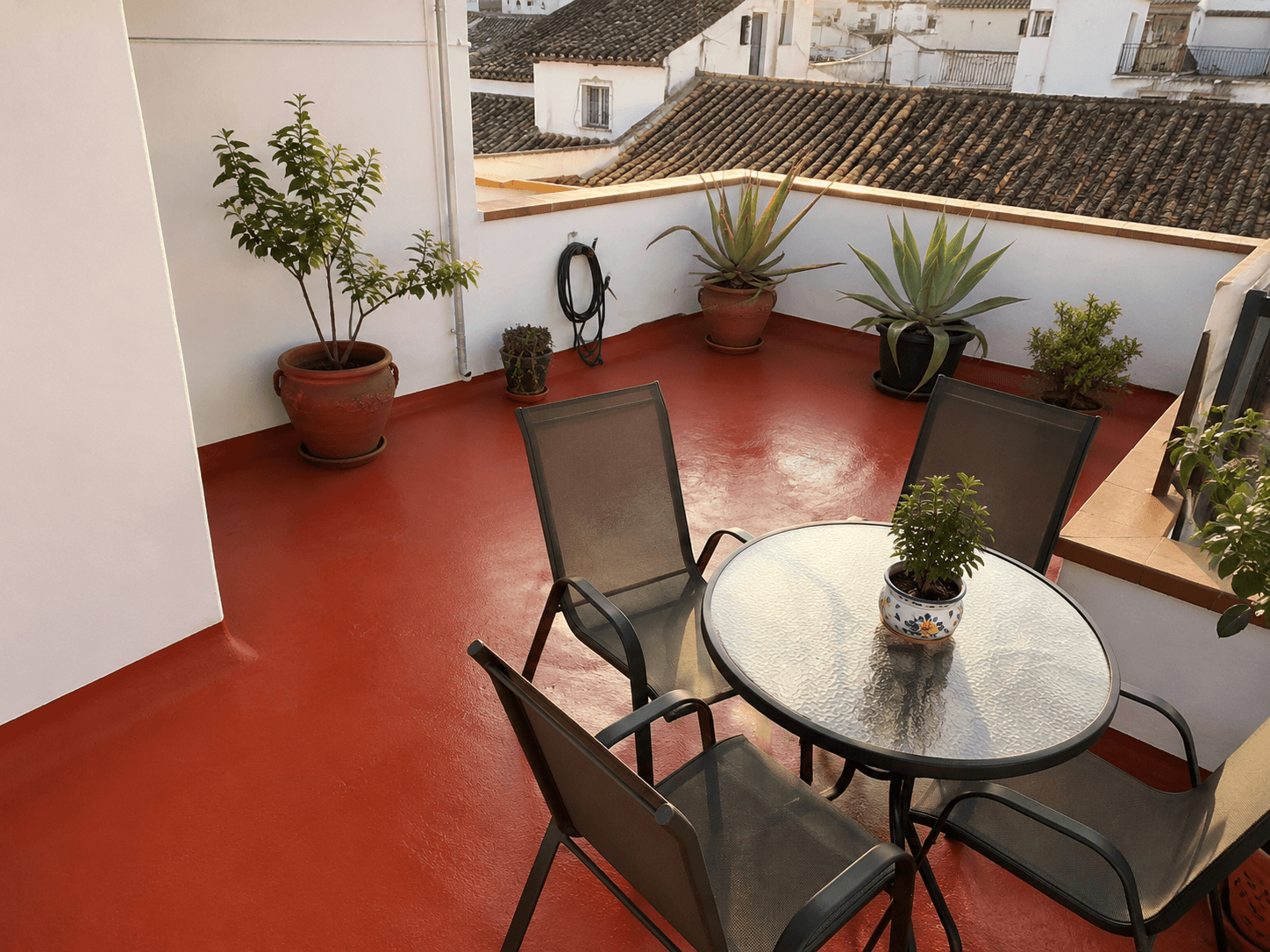
On terraces and balconies, polyurea provides a seamless waterproof layer that can also serve as the walking surface or as the base for new tiles. The topcoat is UV-stable, keeps its colour in the full Spanish sun and is available in virtually any RAL colour, with an anti-slip finish if desired.
Finish options
After applying polyurea, various finishes can be added:
The 100% pure polyurea system we use, from a leading European manufacturer, is CE-certified, holds a European Technical Assessment (ETA) and has an expected service life of 15 to 25 years.
Our service area on the Costa Blanca
We work along the northern Costa Blanca. Pick your town to read more about pool renovation and waterproofing in your area:
Frequently asked questions about roofs and terraces
Can polyurea be applied over an existing bitumen or felt roof covering?
Yes, over bitumen or asphalt sheeting, provided it is firmly bonded, dry and free of blisters. There we use a water-based primer, around 175 grams per square metre. Every substrate has its own primer: concrete about 200 grams, existing tiles or natural stone about 175 grams, timber or OSB about 125 grams, and an existing cured coating a bonding bridge of about 75 grams per square metre. Loose sections come off first.
Do gravel and old roofing sheets have to be removed first?
Yes, always. Old EPDM or PVC sheeting and gravel ballast have to come off, because our system bonds directly to the substrate and cannot do so through loose sheeting or a bed of gravel. After removal we clean the roof, repair cracks and unevenness, and apply the primer that suits the substrate. On a flat roof the membrane then follows at roughly 2.5 kilos per square metre.
Can tiles, decking or artificial grass be laid over the coating?
Yes. Tiles, decking, artificial grass, natural stone or a terrace coating can all go over the membrane, with the waterproofing sitting beneath the finish, protected from sun and daily use. Have the finish laid carefully, though, because mechanical damage to the membrane falls outside the guarantee. Bear in mind too that the layer is no longer visible afterwards and the finish has to come up if you ever need access.
Is the coating walkable and can antislip be added?
Yes, the finished surface is walkable and antislip can be blended into the topcoat. On a terrace we apply the membrane at roughly 2 kilos per square metre, on a flat roof around 2.5 kilos, always with a UV topcoat of about 300 grams per square metre in two coats. Antislip is particularly sensible on roof terraces, near steps and anywhere the surface is regularly wet.
Ready for a waterproof solution?
Request a free quote today. We will contact you within 24 hours.
No answer? Send a WhatsApp. If we're up on a roof, we read it in between and reply quickly.